

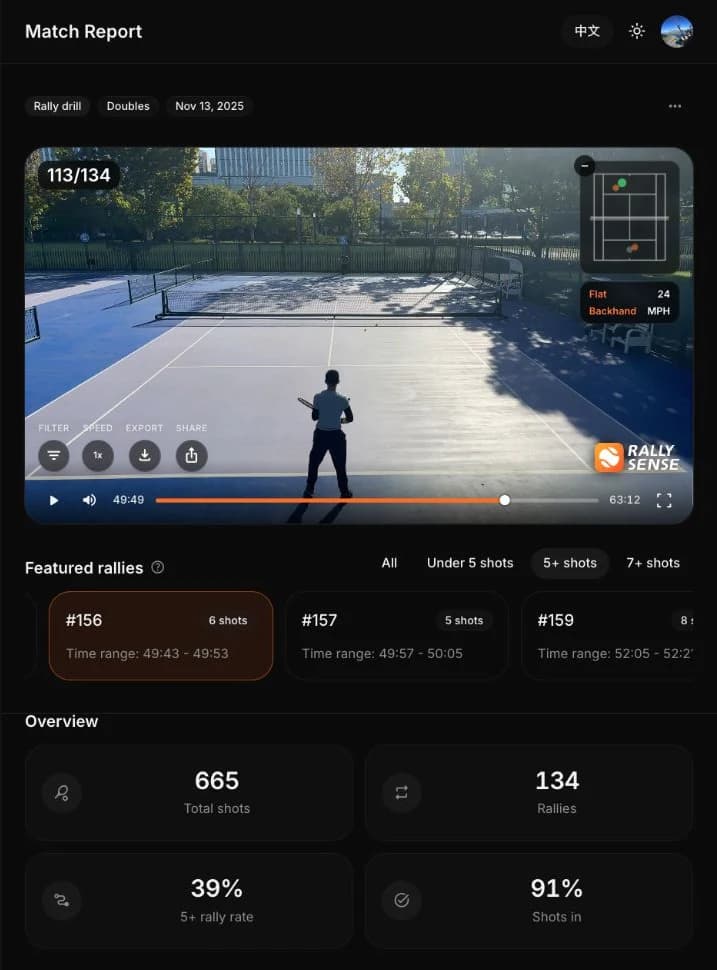
A match-review guide
What your match video can tell you after the score is over.
A useful review is not a list of everything that happened. It is a clear explanation of one repeated pattern—and a decision you can try the next time you play.
01 — Start with evidence
Your memory is a useful clue, not the whole story.
After a close match, it is natural to remember the point that felt decisive. But what felt like a bad backhand day can turn out to be a rushed change of direction, short neutral balls, or a few repeatable errors at the same moment in the rally.
Video gives the feeling a reality check. Start with the patterns that appear more than once, then open the shots and rallies behind the number. The clip matters as much as the metric.
02 — Make a tactical choice
A pattern only matters if it changes a decision.
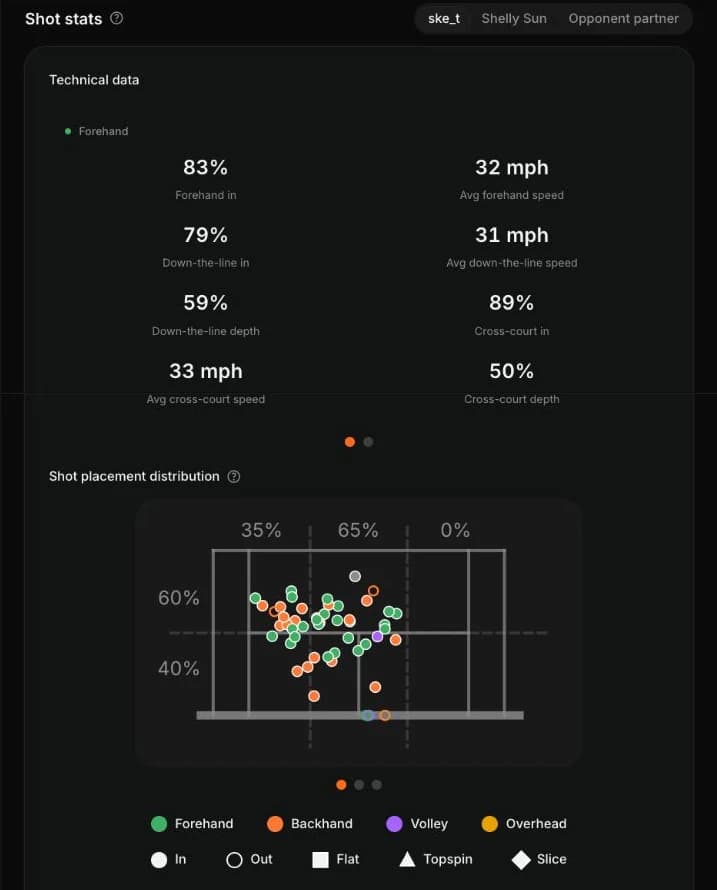
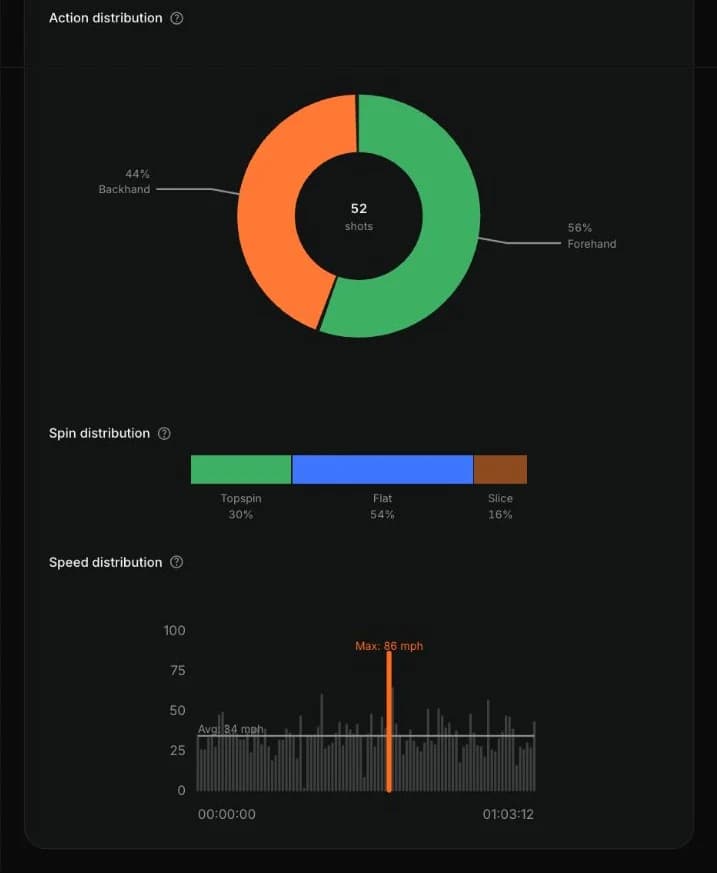
The goal is not to prove that one stroke is good or bad. Compare direction, depth, speed, spin, and rally length to decide when to reset the point, when to attack, and when changing direction is worth the risk.
That turns analysis into something practical: a clearer shot selection in a familiar situation, rather than a dashboard you forget before your next session.
“The goal is not to explain every point. It is to take one clearer decision into the next match.”
Case file: from data to a decision
Keep the recommendation honest—and playable.
This example uses the sample report’s actual backhand-direction data. The small sample is visible, not hidden, so the recommendation can be useful without pretending to be a guarantee.
Next-match focus
Protect your backhand before changing direction.
- Backhand crosscourt
- 6 / 7 in
- Backhand down the line
- 3 / 6 in
86% in
50% in
What to try next
In neutral rallies, use the backhand crosscourt to reset the point. Change direction from the forehand—or only take the backhand down the line when you get a shorter ball.
Evidence: Three missed backhand down-the-line clips across six attempts.
Confidence: Medium